Brick Out - Shoot the ball
- 4.5
- Rating
- 10.00M
- Installs
- Free
- Price

 Analysis by App-foxy
I picked up Brick Out - Shoot the ball expecting a simple way to fill a few spare minutes, and that is exactly where it makes the most sense. It is a free puzzle game from Puzzle1Studio built around aiming shots at brick formations, clearing them, and trying to keep a run going. The rules are easy to understand almost immediately, but the angle of each shot gives the game enough room for small decisions rather than turning every round into pure tapping.
What stood out to me was how naturally it fits around ordinary household routines. One person can play while waiting for dinner, another can take a turn on the same device during a short break, and nobody needs to learn a complicated control scheme first. That simplicity is also the main limitation: if you want a deep story, a large collection of modes, or a competitive social layer, this is not trying to be that kind of game.
How Brick Out works when several people share a device
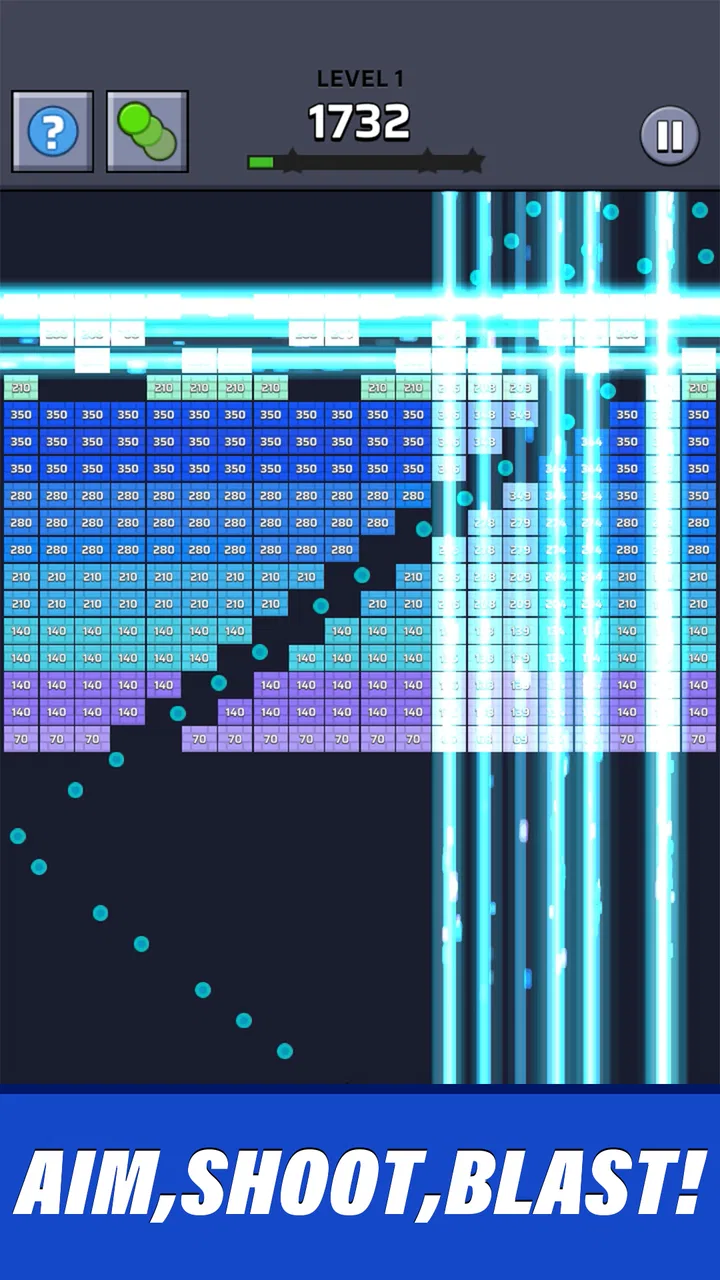
The central interaction is straightforward. You aim a line of balls and release them toward the bricks, hoping to break as many as possible before the next arrangement becomes too difficult. The balls bounce from surfaces, so the useful shot is not always the most obvious one. I found myself looking for side angles and lower edges, especially when a direct hit would leave too many bricks untouched.
You May Also Like

 Blood Strike: 2.5 Anniversary
Blood Strike’s Loadouts Turn Every Drop Into a Tactical Gamble
A close look at Blood Strike’s custom loadouts: how fast access to signature weapons reshapes its battle royale rhythm, rewards preparation, and narrows the gap between fights.

 Pandora - Music & Podcasts
Pandora’s Music Is Easy to Start, but Harder to Recover
Pandora’s strength is its low-effort path from a seed to a station. Its weak spot is how much confidence it asks you to place in connection, setup, and quiet recovery.

 8 Ball Pool
 Is Built on Rivalries, Rematches, and Routine
A close look at the rivalries, rematches, shared routines, and unanswered safety questions that turn a quick pool match into a persistent mobile community.

 Samsung Music
’s Quiet Strength Is Playing What You Already Own
Its reach comes less from spectacle than from dependable access to a personal library. That simplicity is both the app’s strongest retention engine and its ceiling.

 AccuWeather: Weather Radar
AccuWeather Review: A Quick, Clear Forecast for Everyday Decisions
For everyday plans, the best forecast is the one you can understand quickly. AccuWeather makes rain timing, radar, and local conditions easy to act on, with a few trade-offs.

 Hill Climb Racing
Why Hill Climb Racing Still Turns Crashes Into One More Run
A tiny car, a bumpy hill and one more upgrade: Hill Climb Racing keeps resurfacing because its simple chaos makes every near-miss feel personal.
More From Our News Desk



That makes it suitable for shared-device use because a new player can understand the objective by watching one round. A child, parent, or friend does not need a long explanation about character abilities or a complicated inventory. The practical handoff is simple: finish the current shot, pass the device, and let the next person decide where to aim.
There is a small but important difference between watching and playing. From the outside, the game can look like a reflex challenge, but I got better results by slowing down before releasing the shot. The best move often depends on where the balls will return, not merely on which brick is closest. If you are introducing it to someone else, explaining that point is more useful than telling them to shoot quickly.
In my home-use scenario, the game works best as a casual turn-taking activity rather than a formal multiplayer session. Two people can compare how far they get or discuss a promising angle, but the game itself remains a solo puzzle experience on the screen. That distinction matters if you are looking for direct head-to-head play. It can create conversation around a shared device, but it does not replace a dedicated multiplayer game.
Why the short-session format is useful
I liked that a round does not demand the kind of uninterrupted attention associated with a long adventure or strategy game. If I had only a few minutes, I could still make meaningful progress. The game also suits moments when a household is waiting for something: a short appointment, a meal to finish, or a quiet pause between chores.
At the same time, the easy entry can encourage “one more try” behavior. A failed attempt is simple to restart mentally, and that can make the game more absorbing than its basic presentation suggests. For shared use, I would agree on a natural stopping point before handing over the phone, such as after a completed attempt. Otherwise, the person holding it may keep going because the next shot always feels close to solving the layout.
The game is also less suitable when the device must remain available for calls, messages, or other household tasks. It is not a problem unique to this title, but a puzzle that needs aiming can feel frustrating if someone is repeatedly interrupting the player. I would choose it for a relaxed waiting period, not for a situation where the phone has to be passed back and forth every few seconds.
Setting expectations before sharing the phone
Because the game is free, it is easy to install without treating it like a major purchase. The listing includes in-app purchases ranging from $0.99 to $99.99 per item, so I would not hand the device to a child without first deciding how purchases are handled on that device. The game’s free entry is convenient, but “free to install” and “no purchase decision is possible” are not the same thing.
I also recommend separating the game from the general rules for the device. A shared phone may contain personal messages, photos, saved passwords, or work material. Brick Out does not change that broader privacy issue. Before passing the phone around, I would close unrelated apps and make sure the player only has access to what the household is comfortable sharing.
This is especially important with younger players. The content rating is Everyone, which fits the nonviolent brick-breaking concept and uncomplicated presentation. Still, an age-appropriate content rating does not automatically settle questions about spending, screen time, or access to the rest of the device. Those boundaries need to come from the person managing the phone or tablet.
Another useful boundary is deciding whether the game is for independent play or supervised turns. An older child may be able to use it casually, while a younger child may need help with aiming and with knowing when to stop. I would treat the rating as a description of the game’s content, not as a complete household-use policy.
Coordinating turns without making the game complicated
The easiest way to share it is to keep the coordination informal. One person plays an attempt, then gives the device to the next person. Since the main challenge is choosing a shooting angle, spectators can contribute by suggesting a route, but I found it better to let the player make the final decision. Too many instructions turn a relaxing puzzle into a group argument.
A useful house rule is to allow one deliberate shot rather than repeated corrections from everyone watching. This preserves the player’s ownership of the move and makes comparisons fairer. If someone is learning, I would allow them to take their time for the first few attempts. Once they understand how rebounds affect the next position, the game becomes more satisfying and less dependent on guesswork.
For a family or shared apartment, the game can become a small coordination exercise: one person spots a possible bank shot, another notices a brick that should be weakened first, and the player decides whether the risk is worthwhile. That is one of its less obvious strengths. It creates discussion from a very small ruleset without requiring accounts, team setup, or a scheduled session.
The trade-off is that progress and performance remain tied to whoever is currently playing on that device. I would not use it as a serious record-keeping competition unless everyone agrees on how attempts are counted. The game is better for “let’s see what happens with this shot” than for a carefully managed household leaderboard.
What the age rating means in everyday use
The Everyone rating makes sense for the basic theme. The action is about breaking bricks with balls, not fighting characters or managing a mature storyline. That makes it easy to recommend as a low-pressure puzzle option when a household wants something visually simple.
However, trust still matters. A child may understand the game quickly but not understand that an optional purchase can affect the household bill. If the device is shared, I would explain in plain language that the game can be played for free while purchases are a separate decision. That conversation is more valuable than assuming the rating answers everything.
I would also consider whether the child can cope with repetition. Brick Out is built around trying shots, seeing a layout fail, and attempting another approach. Some players enjoy that loop; others become annoyed when a promising run collapses because one angle was slightly off. For a child who prefers stories, exploration, or creative building, this may feel too narrow. For someone who likes quick visual puzzles and immediate feedback, it can be a good fit.
On a family tablet, the game’s low learning curve is helpful, but the larger screen can change how comfortable aiming feels. I would let the player try the device for a few minutes before deciding whether it is a good shared option. Comfort, grip, and visibility matter more here than they would in a game that uses only large buttons.
Where it sits among brick-breaking puzzle games
Compared with a classic arcade brick breaker, this game puts more emphasis on planning the path of multiple balls than on controlling a paddle from side to side. That makes it calmer and more deliberate. You are not mainly reacting to a ball in motion; you are choosing an angle and considering the consequences of the rebound.
Compared with match-three puzzle games, it offers less variety in the basic action but gives each shot a more physical sense of cause and effect. Match-three games reward pattern recognition and swaps, while this one rewards finding a route through the brick arrangement. I preferred Brick Out when I wanted a quick spatial problem rather than a board full of changing combinations.
It is also more accessible than many puzzle games that build around stories, collections, or complicated progression systems. That can be a benefit for shared use because nobody has to remember a character build or explain a long chain of objectives. The downside is that players who need constant novelty may find the core loop repetitive sooner than they would with a game offering several distinct modes.
The best alternative depends on what you want from the category. Choose a traditional arcade breaker if you want fast paddle control, a match-three title if you enjoy pattern chains, or a deeper physics puzzle if you want handcrafted problems with more varied tools. I would choose this one for quick aiming decisions and an uncomplicated handoff between players.
Performance, access, and what to know before installing
The game is free to download and requires Android 6.0 or later. That makes it practical for many older Android devices, although the experience will still depend on the condition and screen size of the phone or tablet. Puzzle1Studio has continued the title to current version 2617.1.1, so anyone installing it should check that their device meets the operating-system requirement before expecting it to run.
Its scale is clear from the fact that it has passed ten million installs, with an average rating of 4.5 from around one hundred thousand ratings and roughly fifteen thousand written reviews. Those figures suggest that the simple formula has reached a broad audience, but they should not be mistaken for proof that every player will enjoy the repetition. A popular short-session game can still be the wrong choice for someone seeking depth.
I would also keep the purchase range in mind when deciding whether it belongs on a child’s personal device or a family tablet. The free starting point lowers the barrier to trying it, while the optional spending range means the account owner should understand how purchases are authorized. That is a setup question, not a gameplay complaint, but it affects whether the app feels comfortable in a shared household.
One practical tip is to test the first few sessions without rushing to use any optional purchase. The core appeal is the shot-planning loop, so you can quickly decide whether that loop suits you before spending anything. If the basic aiming does not hold your attention, buying extras is unlikely to solve the underlying mismatch.
Who will enjoy it, and who should skip it
I think it is a strong match for players who like compact puzzle sessions, visible progress within each attempt, and games that can be explained in a sentence. It is particularly convenient for households where different people use the same device because the controls are easy to demonstrate and the theme is suitable for Everyone-rated play.
It also works for adults who want a small mental reset without committing to a campaign. I enjoyed treating each arrangement as a quick geometry problem: where can the first ball enter, which wall can extend the route, and which bricks should be weakened before the next turn? That way of playing gives the simple design more substance than the store summary suggests.
I would skip it if you need direct multiplayer, a strong narrative, or a large range of gameplay systems. I would also look elsewhere if repetitive attempts make you impatient, or if you prefer puzzles with fixed handcrafted solutions rather than an ongoing brick-breaking loop. A more substantial physics puzzle will offer richer problem variety, while a competitive arcade game will provide more immediate action.
For younger players, I would recommend it only alongside sensible device and purchase boundaries. The content itself is approachable, but a shared phone is still a shared phone. Closing personal apps, agreeing on turns, and explaining optional spending are simple steps that make the experience more comfortable for everyone.
My household verdict
After spending time with it, I see Brick Out as a dependable casual puzzle rather than a game that tries to be everything. Its best quality is the clean relationship between aim, rebound, and result. A player can understand the goal quickly, yet careful angles still reward patience. That balance makes it easy to pass around without making it completely mindless.
For a shared household device, I would install it when the goal is occasional turn-taking, quiet entertainment, or a quick challenge that people can discuss while one person plays. I would not present it as a full family multiplayer experience, and I would set purchase expectations before letting a child use it. Those boundaries fit the game better than pretending its simplicity removes every practical concern.
My final recommendation is positive, with a clear condition: try it if you enjoy spatial aiming and short repeatable sessions. The free price makes experimenting easy, and the Everyone rating makes the theme broadly approachable. Just remember that its appeal comes from refining one kind of move, not from offering endless variety. For a household that values easy handoffs and low-pressure puzzle play, it earns a place on the device.
FAQs for Brick Out - Shoot the ball
01What is Brick Out - Shoot the Ball?
Brick Out - Shoot the Ball is a casual arcade game built around the classic brick-breaker concept. You aim and launch a stream of balls to destroy numbered blocks before they reach the bottom of the screen. Each level adds a simple challenge based on angles, block positions, and limited opportunities, making it easy to learn but increasingly demanding as you progress.
02How do you play Brick Out - Shoot the Ball?
Gameplay is controlled by dragging or aiming across the screen to choose the shooting direction, then releasing to fire the balls. The balls bounce from walls and blocks, allowing you to clear several targets in one turn. Players should look for bank shots, target blocks with higher numbers first, and use the available angles carefully to avoid leaving dangerous blocks near the bottom.
03Is Brick Out - Shoot the Ball free to download and play?
The game can generally be downloaded and played without an upfront purchase, which makes it accessible for quick sessions on a phone or tablet. However, free versions of this type of arcade game may include advertising, optional in-app purchases, or both. Before downloading, it is worth checking the store listing for current pricing, ads, and purchase details.
04Can Brick Out - Shoot the Ball be played offline?
The core brick-breaking gameplay may work without a continuous internet connection, which is useful when traveling or when you want a quick distraction away from Wi-Fi. Some features, such as advertisements, rewards, leaderboards, analytics, or promotional content, can require an internet connection. Offline availability may also vary depending on the installed version and device.
05Is Brick Out - Shoot the Ball suitable for children and casual players?
Brick Out - Shoot the Ball is easy to understand and does not require complicated controls, so it can suit children, beginners, and adults looking for a relaxed arcade experience. The challenge comes from planning shots rather than learning complex rules. Parents should still review the app-store age rating and check whether advertising or optional purchases are appropriate for younger players.
Pros
- Simple controls make it easy to start playing immediately.
- Short levels are ideal for quick gaming sessions.
- Brick-breaking mechanics feel familiar and satisfying.
- Works well for players who enjoy casual
- low-pressure gameplay.
- Progressive challenges help maintain interest over time.
Cons
- Gameplay can become repetitive after extended sessions.
- Some levels may feel more dependent on luck than strategy.
- The ball’s movement can occasionally be difficult to predict.
- Frequent ads may interrupt the flow of play.
- Limited variety may not satisfy players seeking deeper gameplay.

Brick Out - Shoot the ball
Gallery